

Modern industrial facilities are shifting away from guesswork, paper clipboards, and delayed end-of-shift reports. Building a modern smart factory relies on real-time production data to drive Lean initiatives, improve Overall Equipment Effectiveness (OEE), increase throughput, and eliminate unexpected downtime.
To achieve true smart manufacturing, plant managers need automated, immediate visibility across the entire shop floor—without the steep costs and headaches of legacy software.
The Gap in Traditional Factory Data Systems
Industry 4.0 relies on a straightforward principle: making better operational decisions using real-time data. To optimize line performance, plant leaders need to know whether equipment is running or stopped, track hourly output targets, pinpoint where bottlenecks happen, and measure downtime frequency. This real-time data feeds essential OEE metrics (Availability, Performance, and Quality) while fueling higher-level software like Manufacturing Execution Systems (MES) and Enterprise Resource Planning (ERP). Without accurate machine-level data, even the most expensive enterprise software is relying on rough estimates.
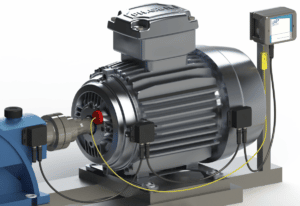
Unfortunately, conventional data collection relies on large MES platforms or direct PLC integration. These traditional systems are notoriously expensive, require months of engineering, and demand complex controls integration and custom code. For small-to-midsize plants or facilities running legacy equipment, traditional MES rollouts are simply too costly and cumbersome. Furthermore, operators on the floor don’t need overwhelming dashboards with hundreds of unused variables—they need simple, trustworthy metrics they can act on immediately.
A Practical Bridge to the Industrial Internet of Things
Leap Production Monitoring Solutions from WIKA IIoT Solutions (Phase IV Engineering) offer a streamlined alternative designed to make shop-floor data simple to collect, understand, and act on. Serving as an ideal entry point to the industrial internet of things, the Leap architecture connects machines directly to plant managers and enterprise software without invasive controls work.
At the core of this system is the Wireless Industrial Production Counter Sensor. Installed in minutes without PLC programming or cabinet rework, these pre-configured nodes automatically count parts or cycles, differentiate active runtime from downtime, track stop/start events, and timestamp every data point.
Rather than flooding plant networks with raw signals, Leap nodes utilize built-in edge computing to process data right at the machine. The nodes automatically distinguish running states from stops, calculate target production rates, and generate clean, OEE-ready metrics aligned with Lean manufacturing principles.
Comparison: Traditional MES vs. Leap Wireless Monitoring
| Feature/Metric | Traditional MES & Wired PLC Systems | Leap Wireless Production Monitoring |
|---|---|---|
| Deployment Time | Weeks to months per line | Minutes (plug-and-play setup) |
| Capital Investment | High hardware, software & licensing costs | Low total cost of ownership (TCO) |
| Machinery Compatibility | Requires modern PLCs / invasive wiring | Universal (ideal for legacy & modern machines) |
| Maintenance & IT Burden | Heavy controls engineering & IT overhead | Minimal IT impact; self-contained network |
| Operator Usability | Overwhelming dashboards with 100+ channels | Clean, actionable operational metrics |
OEE Insights and Enterprise Integration Without the Overhead
Implementing OEE software traditionally requires long deployment cycles and high software licensing costs. Leap simplifies OEE tracking by automatically capturing machine Availability (runtime vs. downtime), measuring Performance indicators (actual vs. expected rates), and supplying precise output counts for Quality analysis. Operations teams can run Leap as a standalone OEE platform today, then seamlessly share that data with broader MES or ERP software as their digital roadmap evolves.
Connecting shop-floor hardware to higher-level platforms is straightforward. Production data captured by Leap can be reviewed directly within a web-based interface, exported to Excel for quick analysis, or passed upstream to ERP systems using standard industrial protocols. Learn more about these flexible connection options in our detailed guide on Leap Software Connection Options.
Rapid ROI and Plant-Wide Scalability

Because Leap uses wireless sensors and bypasses invasive PLC wiring, an entire production line can be instrumented for a small fraction of a traditional MES rollout. With minimal IT involvement and plug-and-play installation, most facilities realize full ROI in weeks rather than years.
A single Leap gateway supports up to 60 sensor nodes, making it easy to start on a single line and scale across an entire smart factory. As your monitoring needs expand, you can seamlessly add complementary sensors to the same gateway network, including:
By combining throughput counts, machine health, and environmental data under one unified system, Leap delivers practical, scalable shop-floor visibility.
Upgrade Your Factory Visibility
Ready to modernize your production data and boost OEE without the complexity of traditional software?
Explore the Leap Wireless Production Counter Sensor or contact WIKA IIoT Solutions / Phase IV Engineering today to discuss your smart manufacturing goals.