
Frequently Asked Questions About Wireless Temperature Sensors
Common Applications for Wireless Temperature Sensors
What Sets Leap Wireless Temperature Sensors Apart
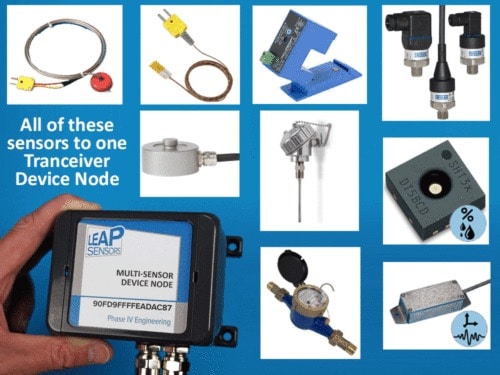
Beyond wireless transmission, the system is built to support the full range of industrial temperature sensors, suited to different applications and accuracy needs.
RTD & PRT Temperature Sensors
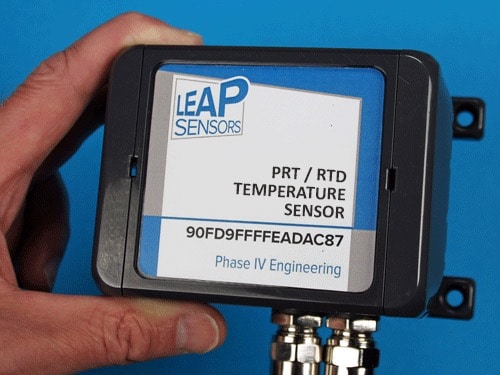
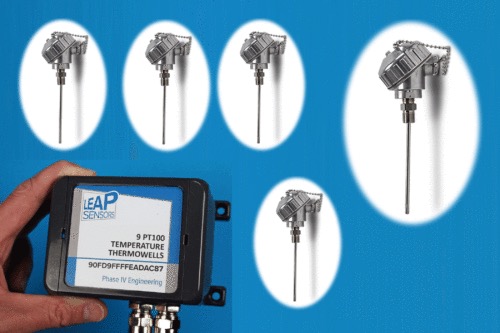
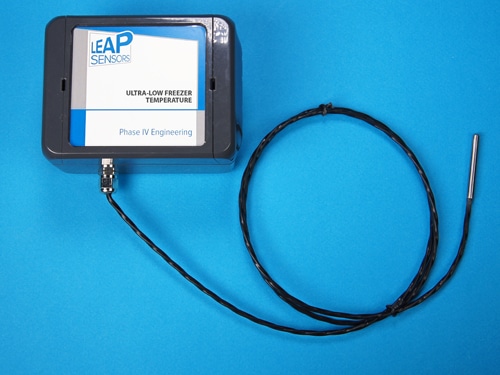
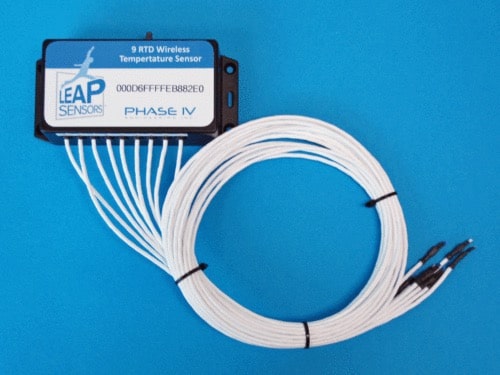
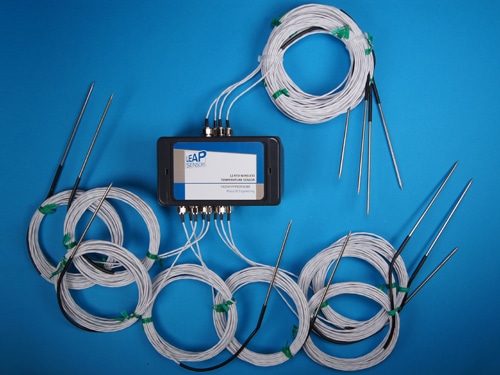
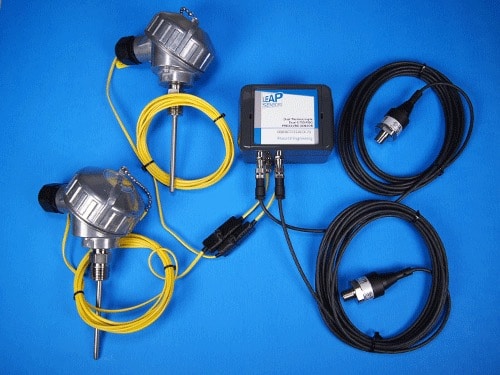
For high-accuracy measurement, the Leap transceiver node integrates with standard industrial RTD probes or higher-accuracy PRTs, including off-the-shelf PT100 probes. A three-wire connection factors out changes in cable resistance caused by temperature swings, so the measurement reflects the probe tip alone rather than the cable run for precise industrial temperature sensor applications.
Digital Temperature Probes
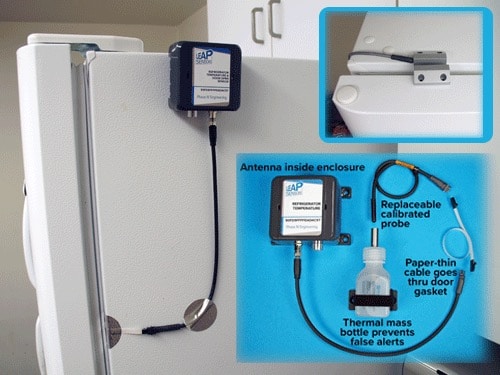
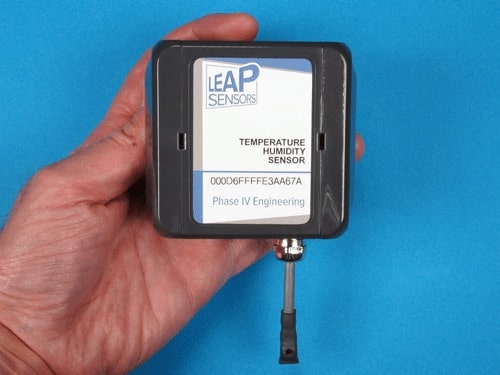
Digital temperature sensors are well suited to non-extreme temperature ranges and offer a replaceable, calibrated probe tip which is often required in applications like vaccine and cold-chain monitoring. Because the tip can be swapped annually for a newly calibrated one, facilities can maintain calibration compliance without replacing the full sensor, keeping the temperature monitoring system cost-effective over time.
Thermocouple Sensors
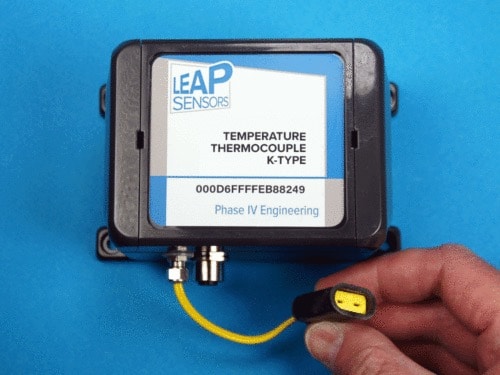
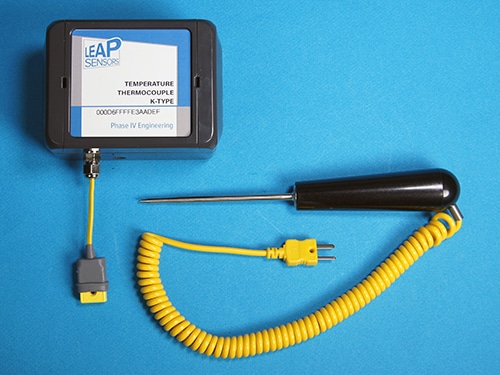
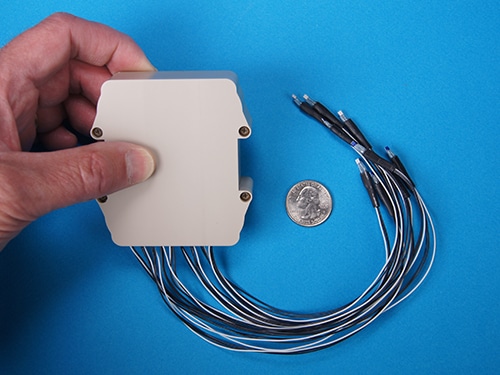
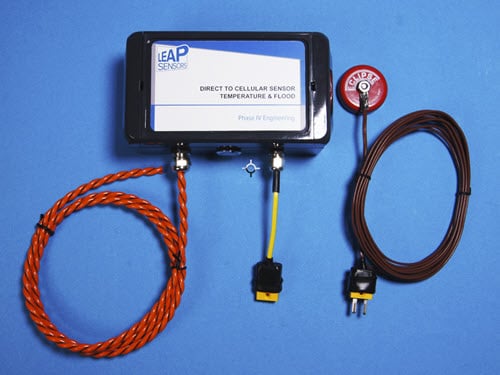
Thermocouples support a wide temperature range and are common across many industrial temperature sensors for industrial applications. The Leap transceiver node uses a standard mini blade thermocouple connector for quick setup with off-the-shelf probes (K-type standard, with J, T, N, S, E, B, and R types also supported.) There is also an option to connect directly to a terminal block using screw terminals. Built-in cold junction compensation and electrical isolation on each thermocouple circuit help eliminate ground loop measurement errors when two grounded thermocouples are used.
Wireless Connectivity & Data Management
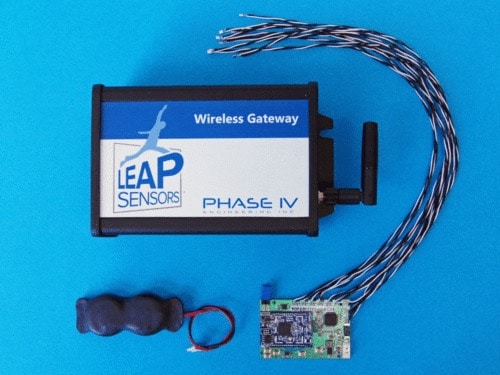
Each transceiver node transmits temperature data with a unique ID to the gateway, with a status LED indicating wireless connection status. Two-way communication lets the gateway push configuration and firmware updates to sensor nodes remotely.