

Industrial Grade Wireless Encoder Sensor, Pulse Counter

$549.00

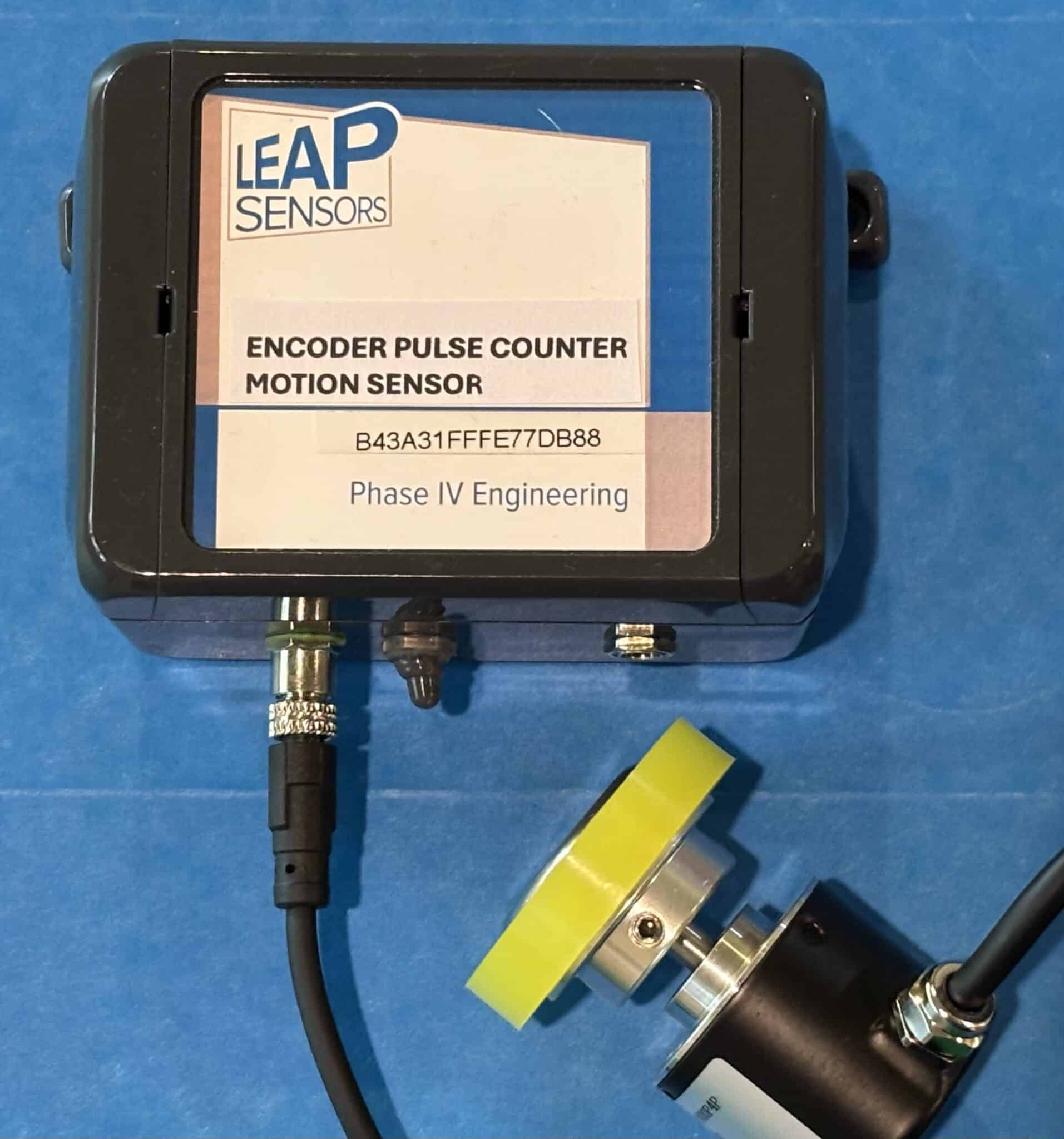
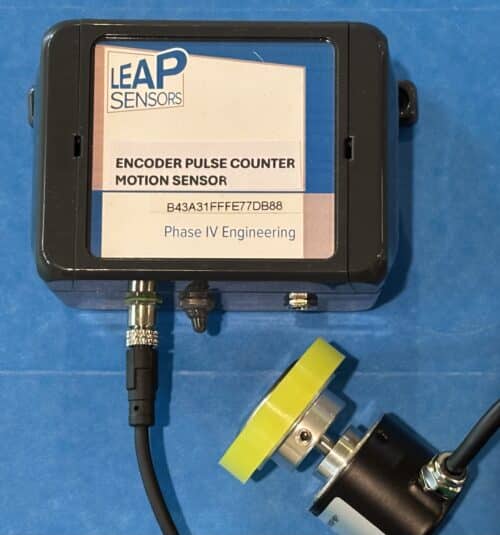
This wireless pulse counter sensor allows you to monitor material length, surface velocity, and production on any continuous production line, whether you need seamless PLC integration or a fully standalone wireless solution. The Leap sensor node integrates with virtually any pulse-output encoder, including contact measuring wheels, rotary shaft encoders, and Hall-effect sensors. Data is transmitted wirelessly through a secure 2.4GHz radio to the monitoring software. Edge computing built into the transceiver node calculates speed, distance, and stop/run events in real time, so you get immediate, actionable production data.

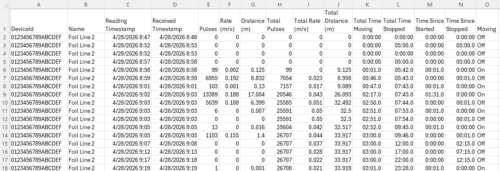
  • Monitors 11 output variables including instantaneous velocity, total distance, total run time, total stop time, and a live moving/stopped status flag
  • Edge computing on the node identifies motion events and stop events automatically, with configurable timeout to define when movement has stopped
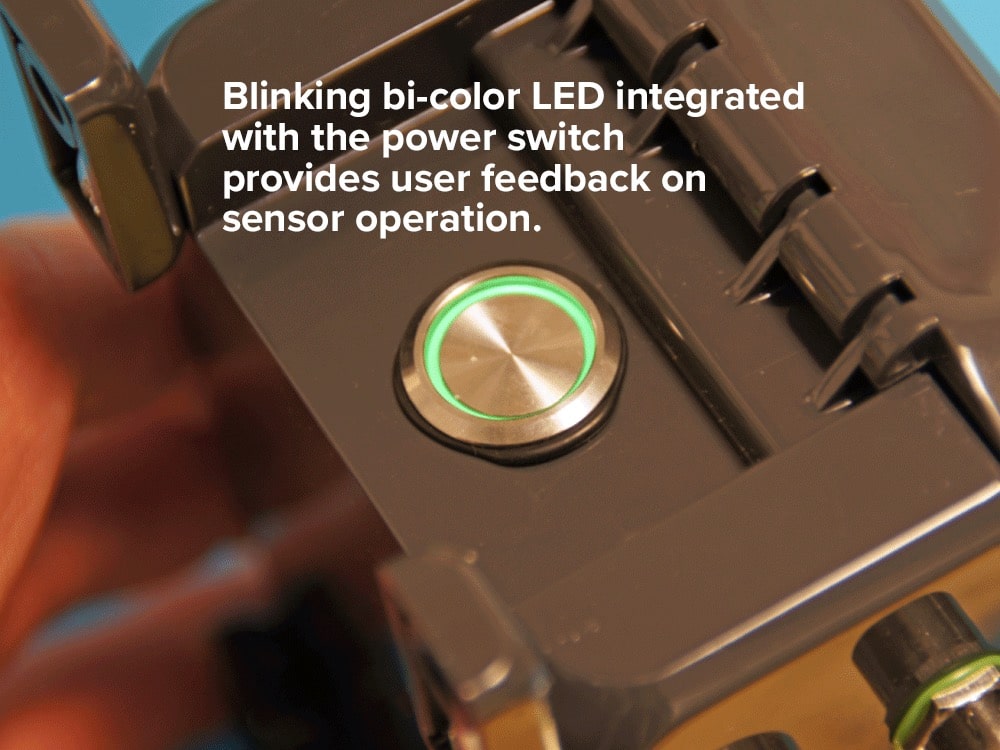
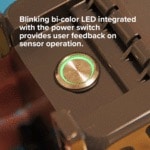
  • Resets total counts via a button on the enclosure, remotely through the software, or on up to 4 scheduled times per day
  • Handles pulse rates up to 1,000 pulses per second — suitable for high-speed production environments
  • Ideal for permanent retrofits on legacy equipment or temporary process optimization and acceptance testing
  • Up and collecting data in minutes — no wiring infrastructure, no IT integration, no PLC required

Configured to Your Application

Wide variety of probes available. Contact us to learn about options for your specific applications.


Part of the breakthrough Leap Sensors® system.


Build your quote here:
Add to Quote

Description

Leap Sensors are specially designed to easily adapt to your specific needs. If this isn’t exactly what you need, please contact us.

  • Wireless Encoder Sensor, Pulse Counter Sensor Specifications

    The Leap wireless pulse-counting encoder motion sensor can be integrated with a wide range in-line encoder that have a pulse output. These include encoder wheels with dry contact relays, reed switches, and Hall-effect sensors. Also works with rapidly pulsing photo-eye or proximity switches monitoring spinning optical encoder wheel gaps.

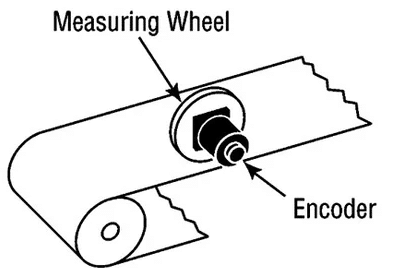
    An encoder wheel (often a contact or non-contact measuring wheel attached to an encoder) is ideal when you want to convert linear motion into production rate (speed, length, throughput). It’s especially useful when you don’t have direct access to the drive shaft or when products move freely on conveyors.

    Common encoder styles that work with this node include:

    • Linear encoders that measure straight line motion with a contact encoder wheel under spring tension.
    • Rotary encoders that measure shaft rotation of motors, gearboxes or drives tied to linear production equipment. For rotary encoders connected to pumps or other volumetric equipment, consider our pulse flow meter sensor logic.

    Contact Us to integrate an application-specific encoder sensor with the Leap Sensors wireless system.

    Edge Node Configuration and Data

    • The node “counts” the pulses. The configuration menu in the Leap software converts each pulse to X meters of material movement (per pulse).
    • Node can be configured to determine the amount of time to determine when encoder movement has stopped after a break in incoming pulses.
    • Choose the appropriate units of measurement for your preference (meters, feet, inches, etc.)
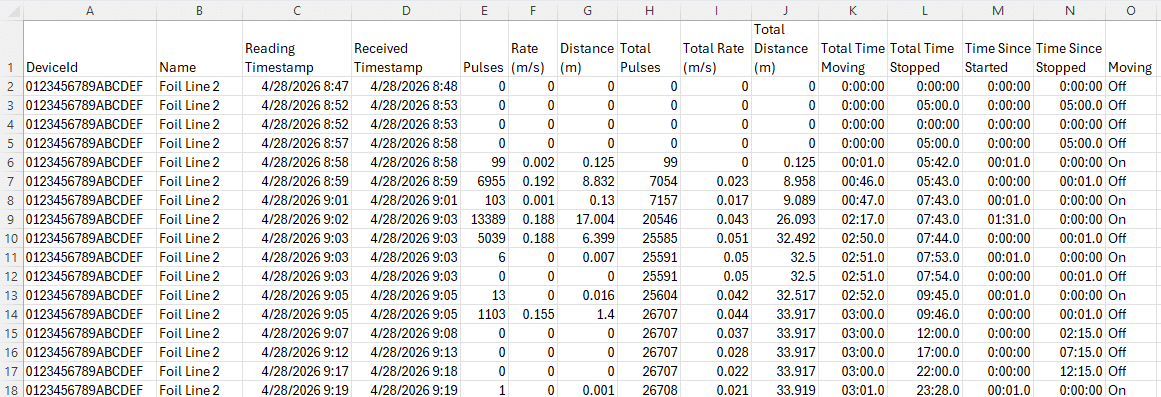
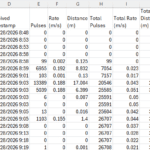
    • The node uses edge computing to count or calculate the following values:
      • Pulses: the count of the physical pulses received from the encoder during the current motion event.
      • Rate: the material velocity over the latest sample interval
      • Distance/Length: the distance of movement or length of material measured by the encoder during the current motion event
      • Total Pulses: the total number of physical pulses since the last time the node was reset.
      • Total Rate: the average rate of motion over all the time since the node was last reset.
      • Total Distance: the total length of movement measured since the last time the node was reset.
      • Total Time Moving: the total amount of time the encoder sensed movement since the node was reset.
      • Total Time Stopped: the total amount of time that no motion was detected since the node was reset.
      • Time Since Started: the amount of time that the current motion event has been active
      • Time Since Stopped: the amount of time there has been no motion since movement was last detected
      • Moving: ON when motion is detected, OFF when motion is not detected.
    • Counts, rates, distances, and times can be reset manually from a button on the node or remotely from the Leap interface. It can also be configured to reset up to 4 different scheduled times per day.
    • Time stamped data can be stored periodically based on time or based on changes in status between motion and stopped.
    • Names and descriptions can be changed to match user preferences or to match with details of a specific application. For example, with an encoder on a production line shaft, shaft rotations might be more appropriate than distance, and RPM might be more appropriate than velocity.
    • Pulses can be monitored at rates of up to 1000 pulses per second.
Contact Us

Prices, Quotes, Questions...

Need a price or quote? Have questions? Want to talk to an expert? Need a custom solution?

Contact Us

Typical Industrial Wireless Sensor Applications

The wireless in-line encoder motion sensor is ideal for:

  • Monitoring continuous rollstock web production processes
  • Monitoring continuous web production processes in packaging and wrapping equipment to track film or material consumption rates
  • Monitoring continuous material processing for linear speed and total length in paper mills, film and plastic extrusion lines, textile manufacturing winding and unwinding
  • Monitoring conveyor belts
  • Monitoring lumber, steel and bulk material processing for measuring cut lengths, feed rates and total throughput.
  • Monitoring wire and cable winding and unwinding lengths
  • Monitoring machine processing rates and total production downtimes based on number of rotations
  • Use on legacy equipment without instrumentation or PLC access
  • Great for both permanent retrofits or temporary equipment tests
Go to Top